


A visitor management system is an easy thing to defer. Reception already works. The book is already there. Nobody has complained. And unlike a meeting room panel, there is no daily visible annoyance building a case for you.
So the argument has to be made on the days that have not happened yet.
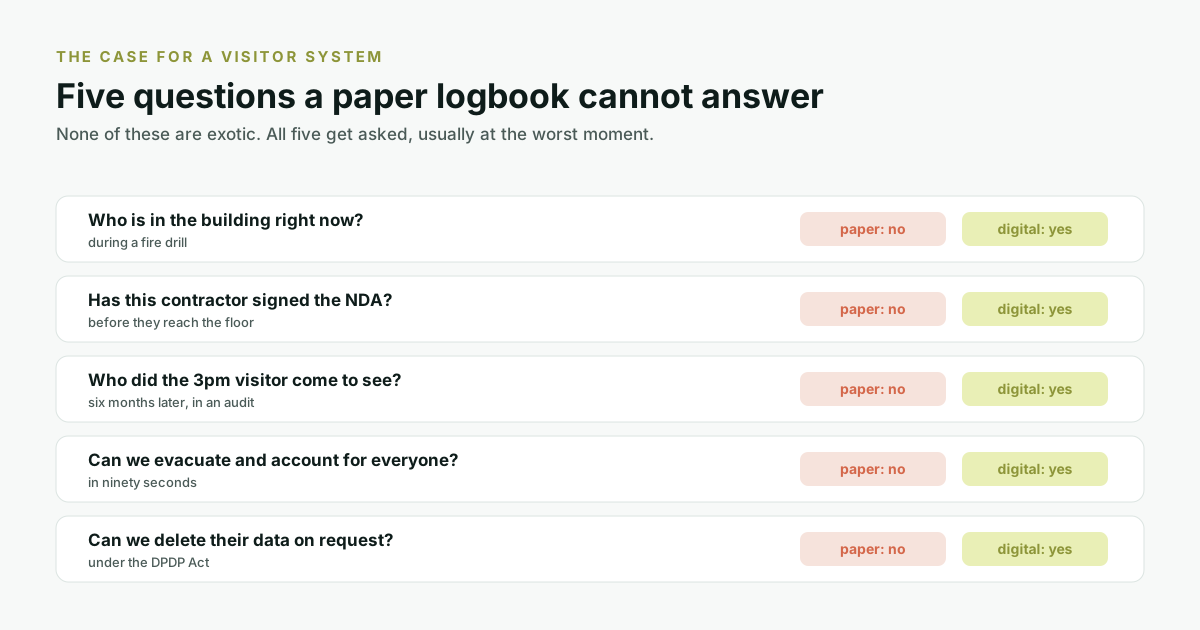
1. Who is in the building right now?
This is the fire drill question, and it is the one that turns a paper book from an inconvenience into a liability. The book tells you who signed in. It does not tell you who signed out, because roughly half of visitors do not, and it cannot tell you who is currently inside without somebody reading every line and doing subtraction under time pressure.
A digital system answers it as a number on a screen, and can put that number on a phone belonging to whoever is running the muster point.
2. Has this contractor signed the NDA?
Most organisations require something signed before certain visitors go past reception: an NDA, a safety induction, a photography policy. On paper this is a clipboard, a signature, and a filing cabinet that nobody has audited since it was installed.
The failure is quiet: the form was signed but cannot be found, or was never signed and nobody noticed. Both surface at the same moment, months later, when it matters legally.
3. Who did the 3pm visitor come to see?
This is the audit question, and it arrives six months after the visit. Paper answers it only if the handwriting is legible, the host's name was written accurately, and the book still exists. Digital answers it as a search.
4. Can we account for everyone in ninety seconds?
Related to the first question but not the same one. Knowing the count is not the same as knowing the names, and knowing the names is not the same as being able to hand them to a fire officer. This is the question that most clearly separates a visitor log from a visitor system.
5. Can we delete their data if they ask?
This one is new, and it is the reason the deferral is getting harder to justify in India specifically.
Under the Digital Personal Data Protection Act 2023, personal data is any data about an individual who is identifiable by or in relation to that data. A visitor book contains names, phone numbers, employers, vehicle registrations and often signatures, comfortably inside that definition. A bound paper book is a system in which selective deletion is physically impossible without destroying other people's records on the same page, and in which every visitor can read the details of everyone who signed in before them.
What a digital system is actually for
Not speed. The genuine gains are in the questions above, and they share a shape: they are all about being able to answer something later.
- A live occupancy list, not a chronological log, who is in, right now, derived from check-ins and check-outs rather than from subtraction.
- Documents captured at check-in, timestamped and attached to the visit, rather than filed separately from it.
- A searchable history, so the audit question takes seconds rather than an afternoon.
- Host notification, which is the part visitors notice and the part that removes the queue at reception.
- Per-record deletion, which is what makes a data request answerable at all.
What it will not fix
Oversold visitor systems are why some facilities teams have become sceptical of them, so the limits are worth naming.
- It will not stop tailgating. Somebody walking in behind a badged employee is an access control problem, not a check-in problem.
- It will not make an unstaffed reception feel welcoming. A kiosk with nobody behind it is still a kiosk with nobody behind it.
- It will not fix a building whose real problem is that visitors cannot find the entrance.
- It will not remove the need for a policy. A system enforces rules; it does not decide what they should be.
If you are building the internal case
- Run the fire drill question as an exercise. Ask reception, unannounced, how many visitors are currently in the building. The time it takes to answer is your business case.
- Pull three visitor records from six months ago. If they cannot be produced, that is your audit exposure demonstrated rather than argued.
- Count what reception does per visitor today. The call to the host, the badge, the form, the escort. That is the labour figure.
- Ask legal what a DPDP data request against the visitor book would involve. The answer is usually the sentence that unlocks the budget.
- Check what your access control already does. If badges are issued at reception, some of this may be half-solved already and the project is smaller than it looks.
Where ElhiTech comes in
A visitor system is not a standalone purchase, and the organisations that get least out of one buy it as though it were. It has to agree with the access control that issues the badge, the directory that knows the host, and the panels and signage a visitor passes on the way in. That integration surface is the hard part, and it is the part that decides whether the system works on day one or becomes another island of data that somebody exports to a spreadsheet.
Those surrounding pieces are what we already run. Access control, workplace touchpoints and signage are deployed on sites of exactly this shape, which means the connections a visitor system depends on are not a future integration project for us.
Our own visitor product is in development and not yet released. If you are scoping this now, that timing is worth a conversation rather than a wait. We are shaping it around how reception actually runs in Indian offices, including delegated booking and the host-notification flow, and we are taking on design partners who want a say in that.
Talk to a solution architect about where visitor management fits the estate you already have, and what the DPDP question underneath all of this means for the records you keep today.
Frequently asked questions
What is a visitor management system?
Software that replaces the paper sign-in book: it records arrivals and departures, notifies the host, captures any documents a visitor must sign, and keeps a searchable history of visits. The defining difference from a log is that it can tell you who is in the building right now.
Why is a paper visitor book a problem?
It cannot tell you who is currently in the building, because most visitors never sign out. It cannot reliably produce a record six months later. Documents signed on a clipboard are filed separately from the visit. And it shows every arriving visitor the details of everyone before them.
Does the DPDP Act apply to visitor records?
A visitor book holds names, phone numbers, employers and vehicle details, which fall within the Act's definition of personal data as data about an identifiable individual. That makes deletion requests and access control over those records a live question, and a bound paper book cannot support selective deletion.
What will a visitor management system not solve?
Tailgating, which is an access control problem. An unstaffed reception, which is a staffing decision. Wayfinding, if visitors cannot find the entrance. And it does not decide your policy. It only enforces the one you set.
How do I build an internal case for one?
Ask reception unannounced how many visitors are in the building and time the answer. Try to retrieve three visit records from six months ago. Count the manual steps per visitor. Then ask legal what responding to a DPDP data request against the paper book would involve.
Does ElhiTech sell a visitor management system?
Not yet. It is in development and listed as coming soon. The pieces a visitor system has to connect to, access control, the directory and workplace signage, are already deployed on sites of this shape, and we are taking on design partners who want the system shaped around how their reception actually runs.